

OSHA’s GHS Revision 7 update includes revised hazard classification criteria, new small-container labeling provisions, and phased compliance deadlines — with one deadline already in effect and more still ahead.
OSHA’s adoption of GHS Revision 7 gives janitorial and sanitation (Jan/San) chemical manufacturers and distributors a clear reason to review their product labels now. Although the final rule was published in 2024, the compliance window is active. One deadline has already passed, and others are quickly approaching.
Manufacturers, importers, and distributors evaluating substances were required to comply with modified provisions as of May 19, 2026. Employers must update substance-related workplace labeling, hazard communication programs, and training by Nov. 20, 2026. Mixture deadlines are scheduled for 2027 and 2028.
For companies managing multiple product lines, package sizes, and private-label programs, the question is not only whether a label needs to change, but how quickly those changes can be reviewed, approved, printed, and put into production without creating unnecessary waste or delays.
Review Product Classifications That May Be Affected
The 2024 OSHA update primarily aligns the Hazard Communication Standard with GHS Revision 7 and includes select provisions from Revision 8. For Jan/San manufacturers and distributors, the first step is to review whether the revised criteria affect existing hazard classifications.
Here’s what to review:
- Aerosols: The aerosol class has been expanded to include nonflammable aerosols and now includes three categories.
- Chemicals under pressure: A new hazard category, drawn from GHS Revision 8, has been incorporated into the aerosols class.
- Flammable gases: New subcategories 1A and 1B have been added.
- Skin and eye hazards: Updated criteria for skin corrosion/irritation and serious eye damage/eye irritation reflect expanded use of non-animal test methods.
Not every Jan/San product will be affected. But aerosol products, solvent-based formulations, cleaners, degreasers, disinfectants, concentrates, and specialty chemicals should be reviewed carefully. Products that previously met labeling requirements may need updates if revised classifications affect pictograms, signal words, hazard statements, precautionary statements, or other required label elements.
Map Every Affected Product to Every Label Version
A classification change rarely affects just one label.
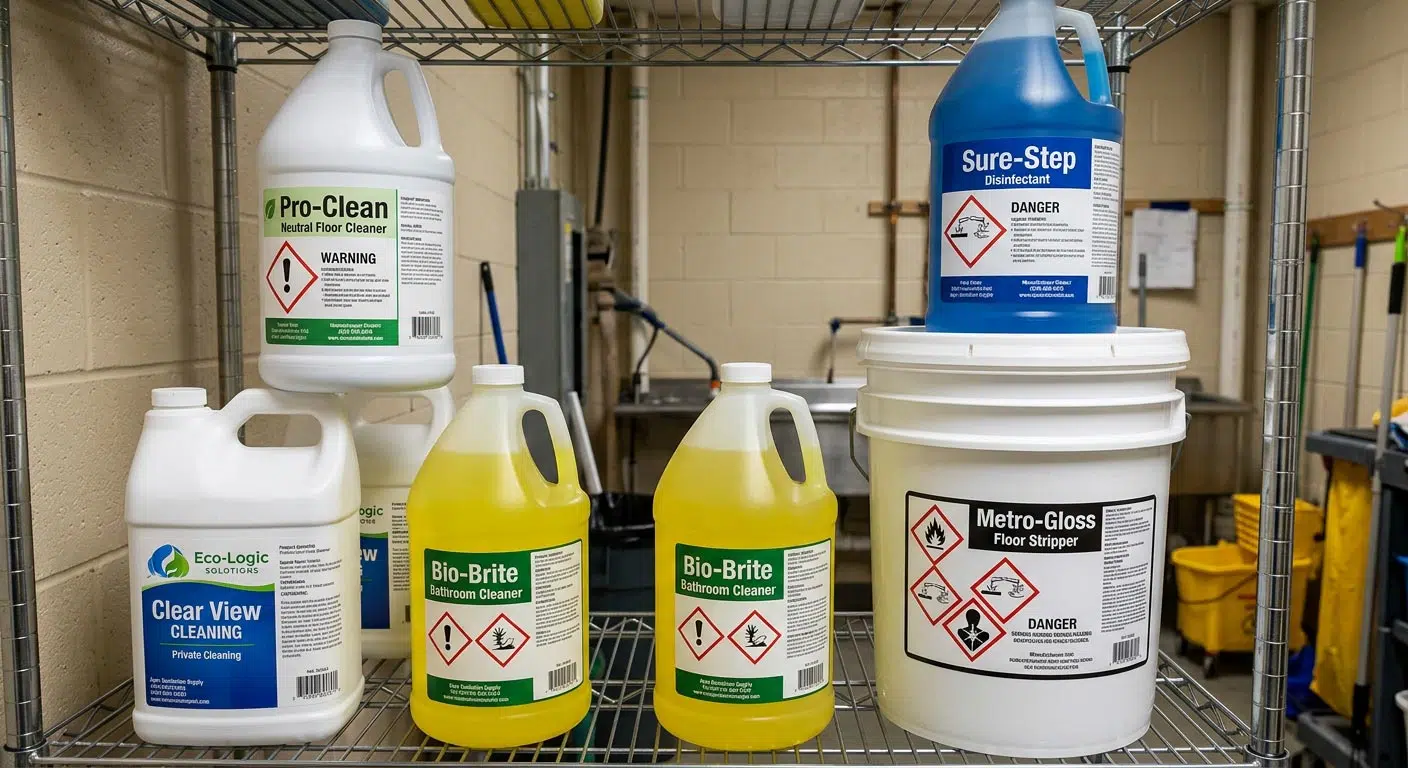
Many Jan/San companies operate in high-mix environments, managing dozens — or even hundreds — of product variations across package sizes, container formats, and distributor brands. A single formulation may be sold under multiple private-label brands, each with its own label design.
Review labels for:
- Trigger spray bottles
- Concentrates and refill containers
- Gallon jugs
- Pails
- Drums
- Private-label distributor products
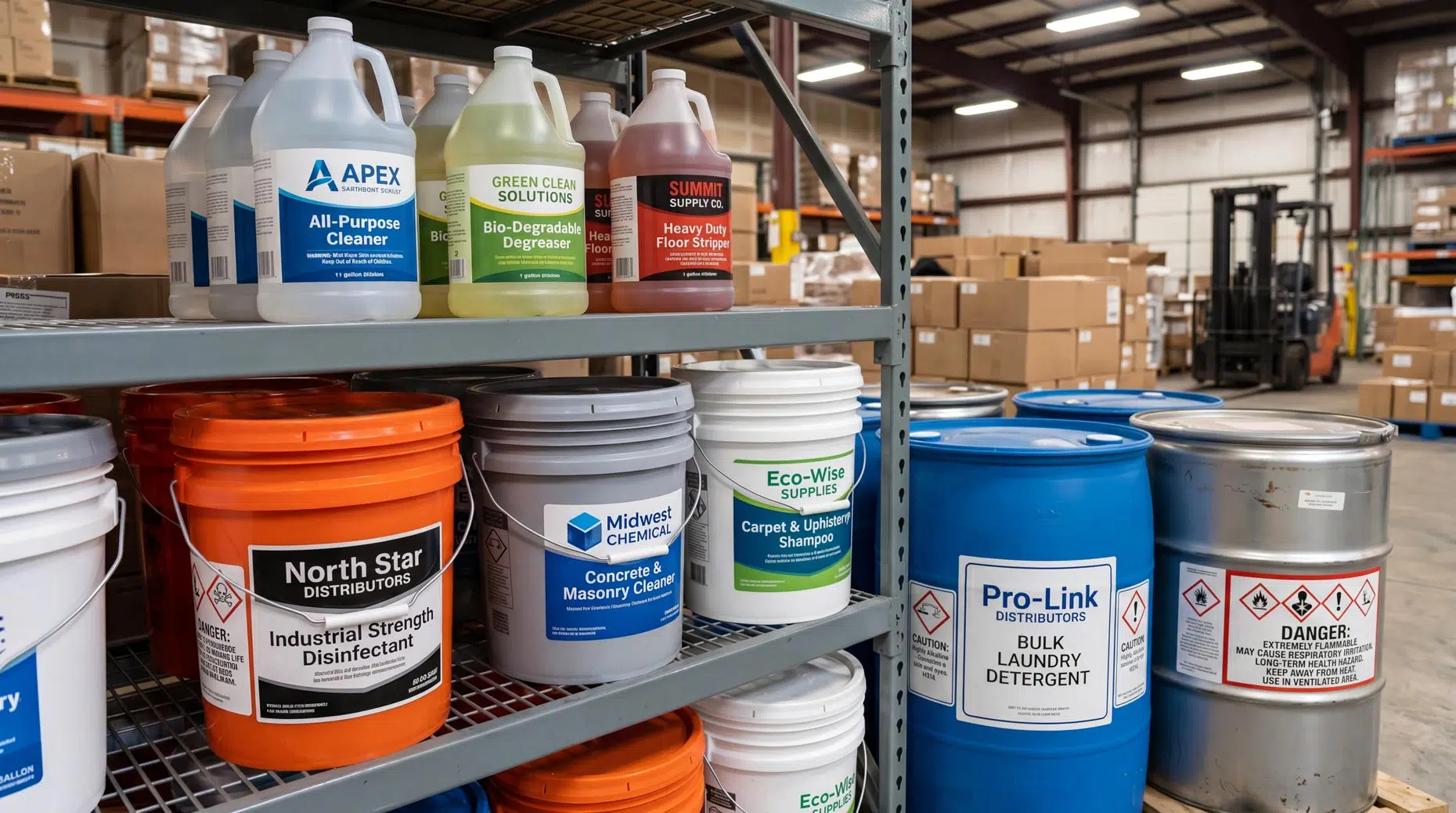
If one formulation requires a label change, every affected container size and private-label version may need to be reviewed, revised, and controlled.
Check Small-Container Labeling
Small-container labeling is a critical change for Jan/San manufacturers and distributors.
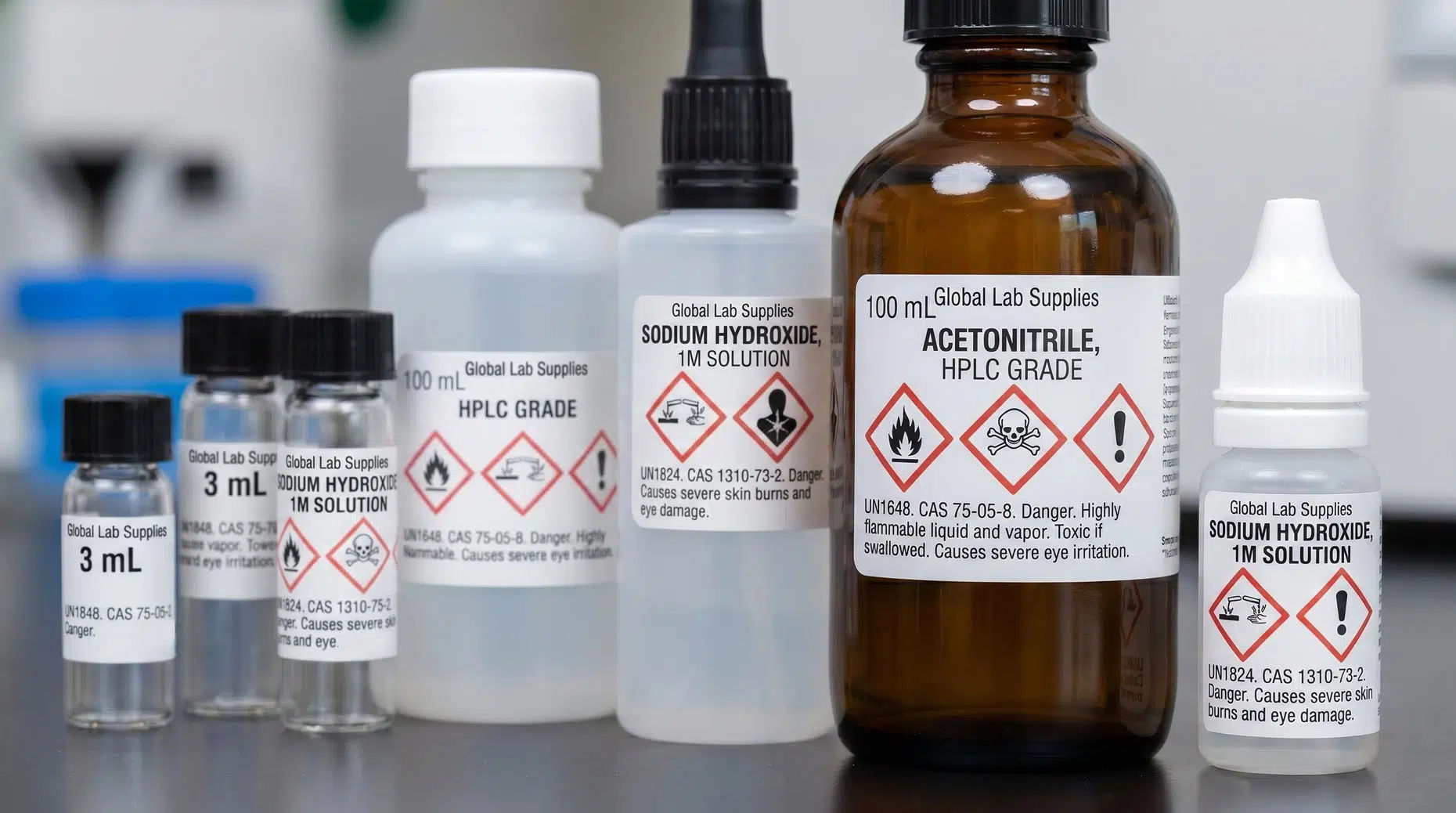
The revised rule introduces a tiered framework that allows abbreviated labels under defined conditions. For containers up to 100 mL, abbreviated labels may be permitted when tags or fold-out labels are impractical. The abbreviated label must include the product identifier, signal word, pictogram(s), and the manufacturer’s name and phone number. Full labeling information must still appear on the outer packaging.
For containers up to 3 mL, OSHA permits only the product identifier on the immediate container when the manufacturer, importer, or distributor can demonstrate that a label would interfere with normal use. Complete label information must still appear on the outer package.
For Jan/San companies, this affects sample sizes, concentrated products, specialty chemicals, and other small-volume packaging. The rule may provide more flexibility, but small text, GHS pictograms, and required information must remain clear and legible.
High-resolution color label printers such as the QuickLabel QL-120De, which uses pigment inks for durable GHS label production, and the QL-300 can help manufacturers produce detailed labels that make better use of limited space while maintaining print quality.
Decide How Updated Labels Will Be Produced
When regulatory requirements change, pre-printed labels can quickly become a liability.
Jan/San manufacturers may need to update dozens — or even hundreds — of labels across product lines, package sizes, and distributor accounts. Companies that rely on outsourced pre-printed labels may have to discard existing stock when required label content changes. Even a small update can create waste, added costs, and delays. The costs climb when multiple private-label brands are involved.
In-house digital label printing gives manufacturers another option. Instead of waiting for outside suppliers, manufacturers can update label files and print revised labels as production requires. This flexibility can help reduce obsolete inventory while improving responsiveness when label changes need to be implemented quickly.
Match Label Materials to Real-World Conditions
Updating label content is only part of the compliance equation. Labels must also remain legible and intact throughout storage, shipping, handling, and use so that required hazard information remains available to workers and end users.
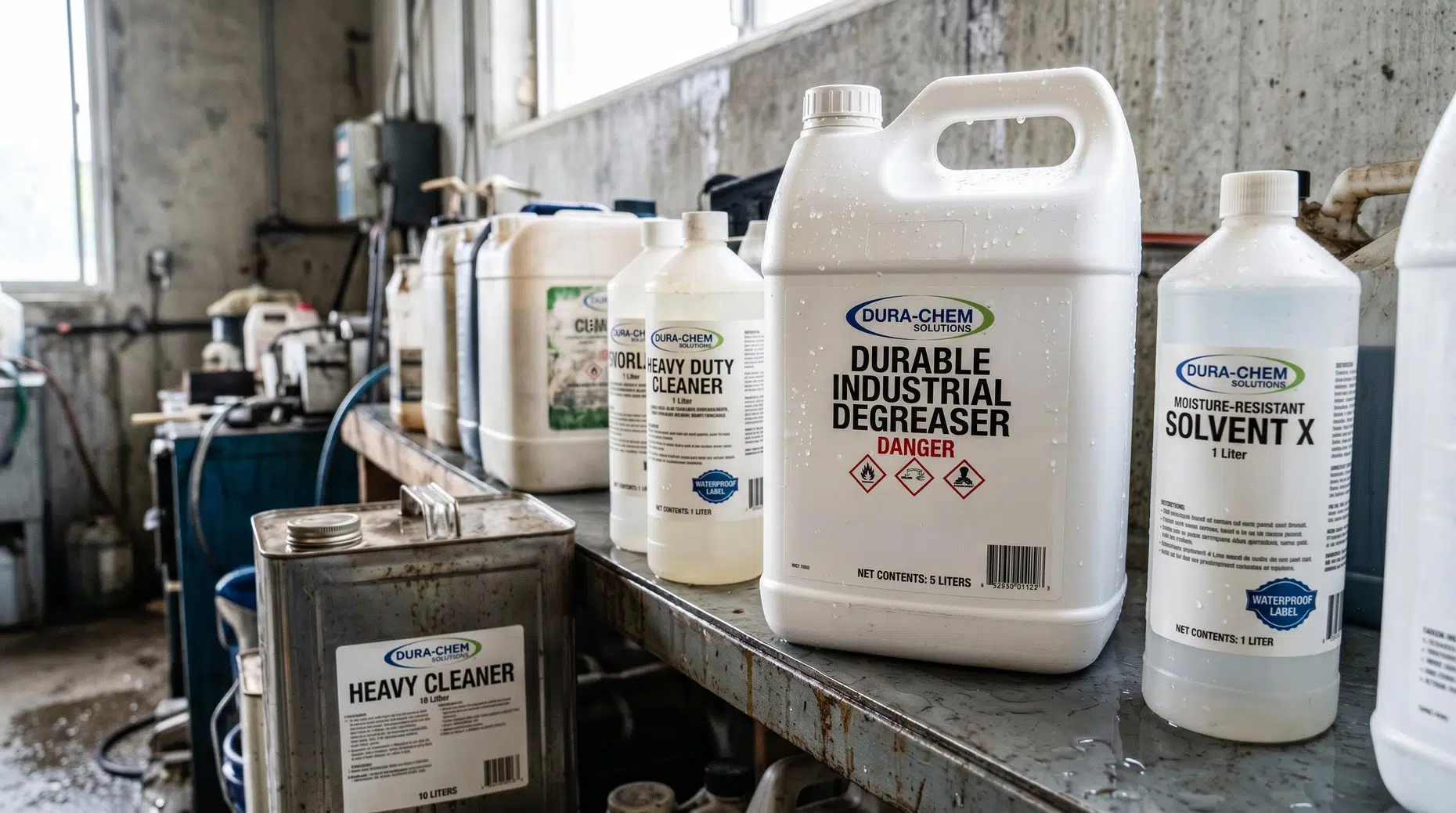
Jan/San products may be exposed to moisture, cleaning chemicals, abrasion, warehouse handling, and challenging environmental conditions. Selecting the right label material is just as important as selecting the right printer.
Depending on the application, manufacturers may require:
- Polypropylene (BOPP) label materials
- Polyester label materials
- Chemical-resistant laminates
- Water-resistant label constructions
When paired with suitable printing technology, these materials help maintain adhesion, legibility, and durability throughout the product lifecycle.
For applications requiring highly durable labels, printers such as the QuickLabel QL-425 and QL-435 support pigment-based printing on label materials designed for demanding chemical labeling environments.
Conclusion
OSHA’s adoption of GHS Revision 7 is not just another regulatory update. For Jan/San chemical manufacturers and distributors, it creates an active label management challenge, with one deadline already in effect and additional deadlines ahead.
Companies should review classifications now, identify affected products, check small-container requirements, update label versions, and decide how revised labels will be produced before deadlines create production pressure. On-demand in-house printing, durable label materials, and flexible color production can help manufacturers and distributors respond more efficiently to changing labeling requirements while reducing the risk of obsolete label inventory.
Key Takeaways
- OSHA’s GHS Revision 7 compliance window is active, with the first major substance deadline already in effect as of May 19, 2026.
- Jan/San manufacturers and distributors should review product classifications, especially aerosols, chemicals under pressure, solvent-based formulations, and skin/eye hazards.
- Small-container labeling introduces a tiered framework for containers up to 100 mL and up to 3 mL.
- A single classification change may affect multiple container sizes and private-label versions.
- Pre-printed label inventories can become obsolete when regulatory requirements change.
- QL-120De, QL-300, QL-425, and QL-435 support responsive, durable, in-house GHS label production.
Frequently Asked Questions
- Why should Jan/San manufacturers and distributors review labels now?
The compliance window for OSHA’s updated Hazard Communication Standard is active. The first major substance deadline is already in effect, and additional deadlines for workplace labeling, hazard communication programs, training, and mixtures are still ahead. - What Jan/San products may need label review?
Aerosols, solvent-based cleaners, disinfectants, degreasers, concentrates, floor care products, specialty chemicals, and private-label formulations should be reviewed to determine whether revised hazard classification criteria affect label content. - What do the small-container labeling rules mean for Jan/San manufacturers and distributors?
Containers up to 100 mL may use abbreviated labels when tags or fold-out labels are impractical. Containers up to 3 mL may require only the product identifier on the immediate container when a label would interfere with normal use and complete label information appears on the outer packaging. - How can in-house digital label printing support compliance updates?
Manufacturers can update label files and produce revised labels on demand, reducing dependence on pre-printed inventory and outside suppliers. This is especially useful when multiple SKUs, container sizes, or private-label brands need updating at the same time. - Why are durable label materials important for chemical products?
Labels must remain legible and adhered throughout storage, transportation, handling, and use, even when exposed to moisture, cleaning chemicals, abrasion, or other demanding conditions.
Sources
- S. OSHA, “OSHA’s Final Rule to Amend the Hazard Communication Standard”
- S. OSHA / Federal Register, “Hazard Communication Standard; Final Rule,” May 20, 2024
- U.S. OSHA / Federal Register, “Hazard Communication Standard,” Jan. 15, 2026, compliance-date extension final rule