

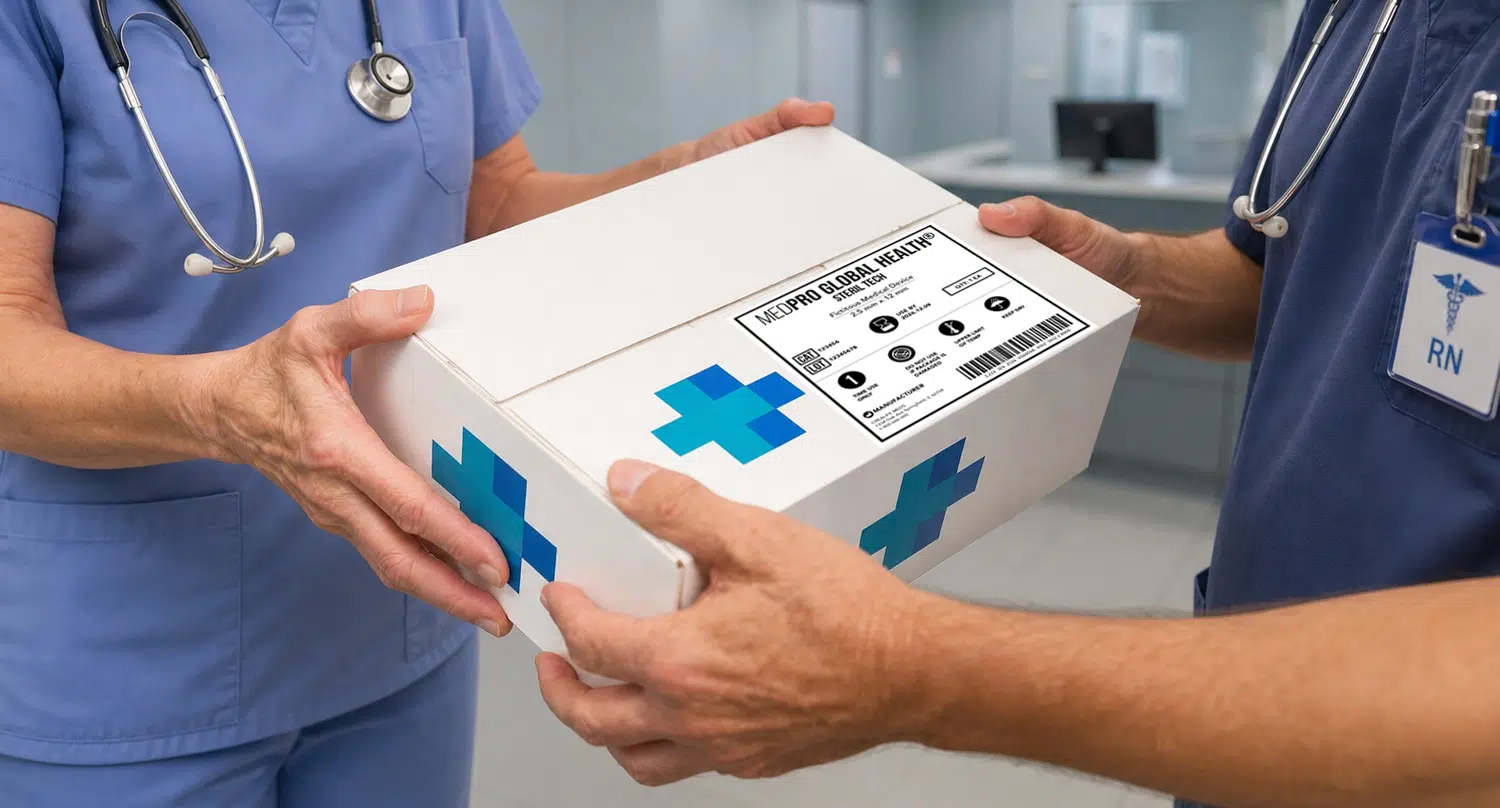
For manufacturers of implants, surgical tools, and other regulated medical devices, UDI labeling leaves very little room for error. A UDI barcode must be present, accurate, and scannable — not just when it is printed, but throughout packaging, distribution, storage, and use.
These requirements create real challenges for medical device manufacturers. Labels often carry a high volume of information in limited space: UDI barcodes, lot numbers, serial numbers, expiration dates, regulatory symbols, and human-readable text. For small devices, surgical tools, and implants, space for UDI information on sterile pouches, cartons, kits, trays, and outer packaging may be limited, but the requirements remain the same.
In-house digital printing gives packaging teams more control over the labeling process. By producing labels and package markings on demand, manufacturers can better manage barcode quality, variable data, and packaging changes without relying on less efficient and often more costly pre-printed inventory or outside suppliers.
What Makes UDI Labeling Complex?
UDI labeling sits at the intersection of compliance, traceability, and print quality. Under FDA requirements, medical device labels must include device identifiers in both human-readable text and machine-readable formats so that products can be identified during distribution and use. (Source: U.S. FDA Unique Device Identification System.)
The challenge is not just adding a barcode to a label. That barcode must print clearly, maintain contrast, and scan reliably. High-resolution printing is critical for small UDI barcodes, where limited label space is not an excuse for poor contrast, distortion, or loss of definition.
Further complicating matters, medical device packaging is not one-size-fits-all. A manufacturer may need to label sterile pouches, cartons, kits, trays, and outer packaging — each with different space limitations and handling conditions.
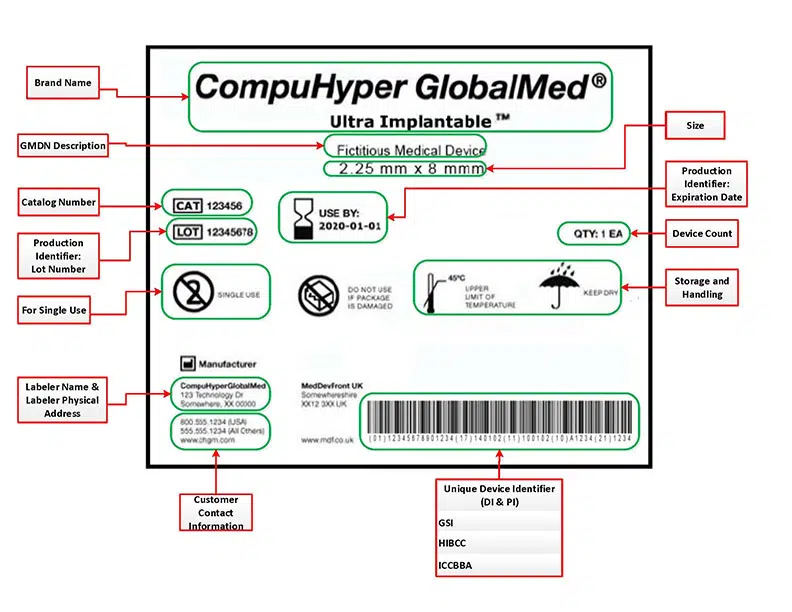
Drivers of UDI Label Complexity
For medical device manufacturers, labeling is critically tied to product identification and traceability. Packaging teams are responsible for managing:
- UDI barcodes and human-readable information
- Lot numbers, serial numbers, and expiration dates
- Regulatory symbols and required label text
- Device variations and packaging formats
- Label updates tied to product or packaging changes
When UDI labeling is inaccurate, unreadable, or inconsistent, the issue can surface during audits, inspections, or FDA compliance reviews. Poor scan performance can lead to a range of issues, including relabeling work, shipment delays, audit concerns, or inspection findings. Even minor labeling issues can have significant consequences if they result in FDA warning letters or inspection findings.
High-Mix Packaging Increases Labeling Pressure
Medical device packaging often takes place in high-mix environments. Teams may move between product families, device sizes, pouch formats, and market-specific labeling requirements. Several factors contribute to the pressure:
- Small labels with dense barcode and text requirements
- Multiple packaging formats across product lines
- Short runs or controlled production batches
- Updates to variable data or regulatory information
- Tight production and release timelines
When labels are pre-printed and stocked in advance, a small revision can make existing inventory unusable. This creates waste, increases costs, and adds unnecessary pressure on production.
High-Resolution Printing Supports UDI Barcode Quality
In-house digital printing helps manufacturers manage UDI labeling closer to production, where data is finalized, and packaging decisions are made.
Color label printers such as the QuickLabel QL-120Xe and QL-300 support high-resolution output for small label formats, dense information, and barcode readability. All of these are required when printing labels that must carry UDI data, lot information, dates, and regulatory text in limited space.
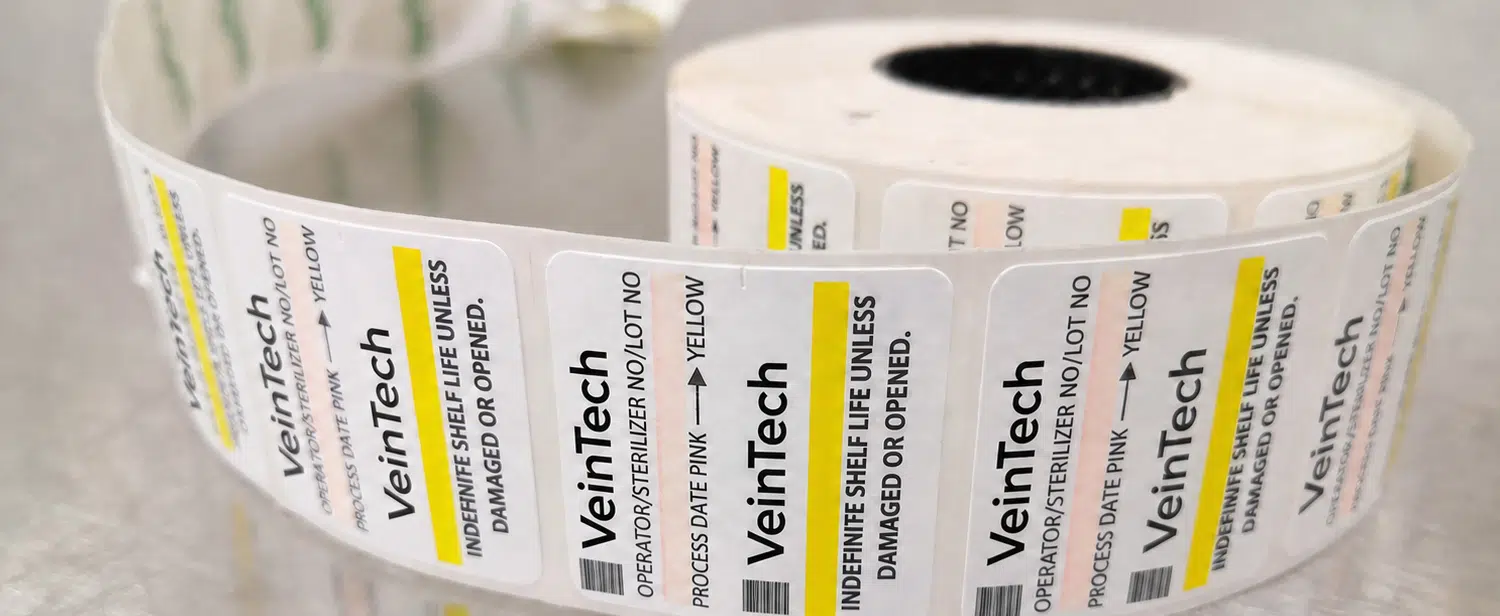
In-house label printing gives packaging teams the real-time flexibility to:
- Update label content without waiting on outside suppliers
- Print variable data as part of the production workflow
- Easier manage short runs and product changes
- Eliminate the need for pre-printed inventory
The bottom-line benefit is this: with in-house digital printing, teams can easily, instantly, and accurately align labeling with production and compliance requirements.
Direct Printing on Tyvek Pouches, Cartons, and Medical Packaging
Medical device labeling often extends beyond pressure-sensitive labels. Sterile barrier packaging, Tyvek pouches, cartons, and outer packaging also require clear identification and traceability information.
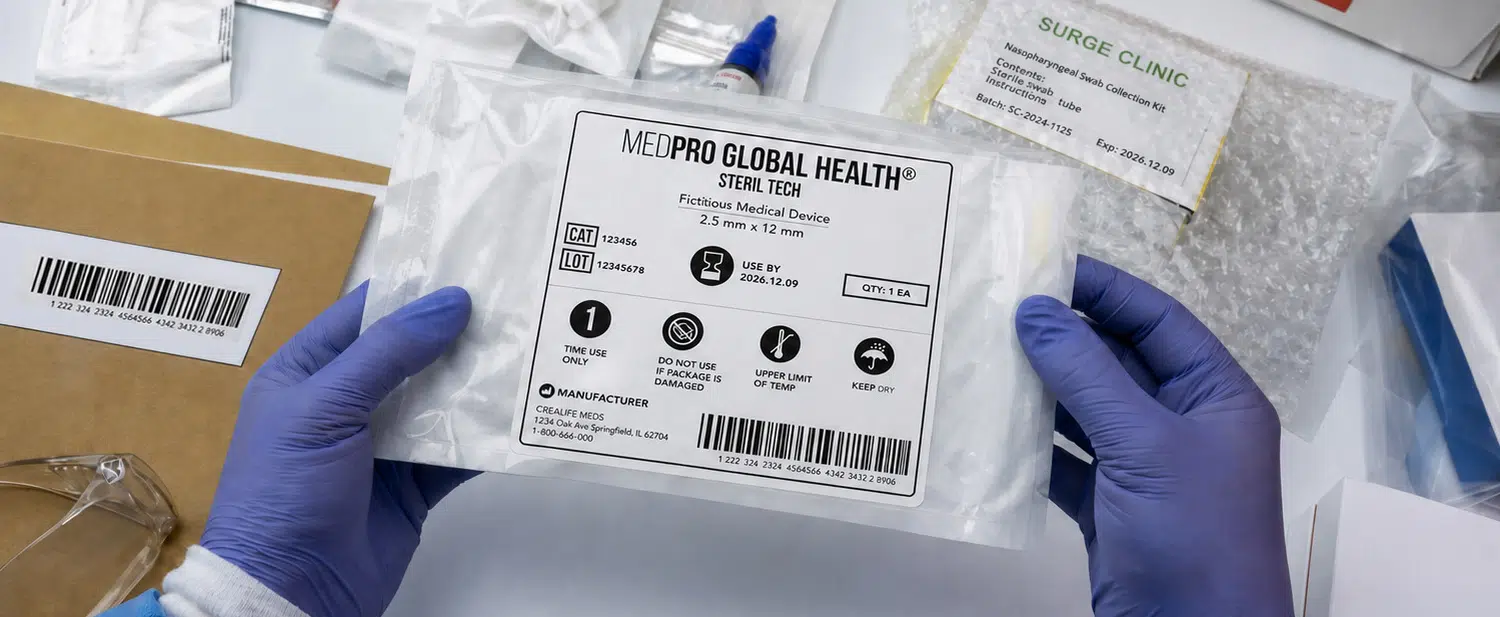
Direct-to-package printing, as provided by the AstroJet AJ-200, supports printing on Tyvek pouches, cartons, and other medical packaging materials, depending on the application and substrate. This capability can reduce the need for separate labels and eliminate additional application steps. Benefits include:
- Reduce label inventory for certain package types
- Simplify pouch and carton marking workflows
- Minimize manual handling steps
- Keep package identification aligned with production data
Direct-to-package printing excels when packaging formats vary, and traceability information must remain consistent across primary and secondary packaging.
Materials and Print Durability Matter
A barcode is useful only as long as it remains readable.
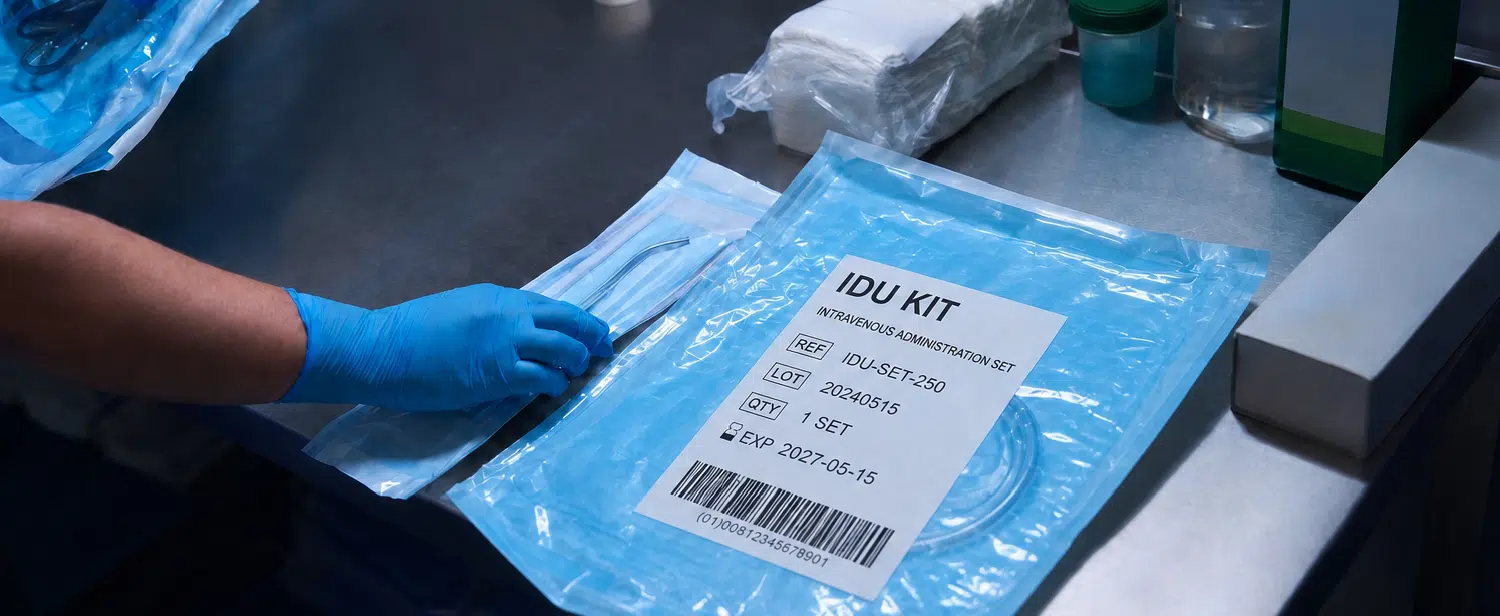
Medical device labels and packaging can be handled repeatedly, stored for extended periods (sometimes in harsh environments), or moved through multiple distribution points before use. In some applications, packaging may also need to remain legible through sterilization-related conditions. Label materials and print quality must endure throughout.
Medical-grade label materials maintain adhesion, legibility, and barcode performance across handling and storage conditions. When paired with appropriate digital printing technology, these materials ensure UDI information remains readable throughout the device’s lifecycle.
Software-Driven Control and Traceability
As UDI labeling becomes more data-driven, software becomes even more critical in assisting packaging teams to manage:
- Variable barcode data
- Lot and serial number information
- Standardized label templates
- Date and expiration fields
- Traceability and audit readiness
Structured workflows help maintain control across production, packaging, and distribution, and reducing manual data entry can reduce inconsistencies and errors.
Conclusion
Medical device labeling requires more than adhering a printed barcode to a package. UDI compliance depends on barcode quality, data accuracy, traceability, and consistency across changing packaging environments.
In-house digital printing gives manufacturers a superior option for managing these requirements, with greater control and flexibility. By combining high-resolution label printing, direct-to-package capabilities, medical-grade materials, and software-driven workflows, packaging teams can support UDI barcode quality while addressing the very real, dynamic challenges of modern medical device production.
Key Takeaways
- UDI compliance requires accurate, scannable barcode quality
- Medical device labels often carry dense information in a limited space
- High-resolution printing supports small UDI barcodes where contrast and definition matter
- In-house digital printing helps packaging teams manage variable data and short runs
- AstroJet direct-to-package printing supports Tyvek pouch and carton marking
- Software-driven workflows reinforce traceability and audit readiness
Frequently Asked Questions About UDI Medical Device Labeling
What is UDI labeling?
UDI labeling refers to the FDA’s Unique Device Identification system, which requires medical devices to carry unique identifiers in both human-readable text and machine-readable formats.
Why is barcode quality important for UDI labeling?
UDI barcodes must scan reliably throughout distribution and use. Poor barcode quality can create relabeling work, shipment delays, traceability issues, or compliance issues.
How does high-resolution printing support UDI compliance?
High-resolution printing produces sharp text, clear barcodes, and dense variable data on small medical device labels and packaging.
When is direct-to-package printing useful in medical device packaging?
Direct-to-package printing can be useful for Tyvek pouches, cartons, and outer packaging, helping manufacturers reduce the number of separate labels and simplify marking workflows.
How does in-house printing improve medical device labeling operations?
In-house printing allows packaging teams to update labels quickly, print variable data as needed, reduce the waste and cost of obsolete inventory, and maintain closer quality control over barcode quality and traceability.